



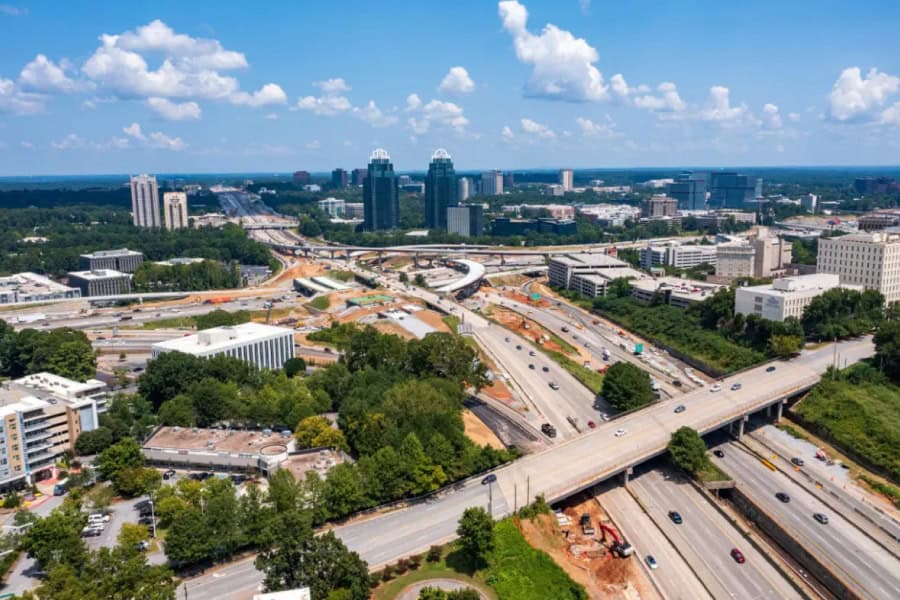
Image from SandySprings.com
If you’ve ever driven through the I-285 and GA-400 interchange during rush hour, you know the experience. Traffic slows unexpectedly, drivers change lanes to make their exits, and large commercial trucks share the road with hundreds of passenger vehicles.
For Sandy Springs residents, this busy stretch of highway is part of everyday life. Understanding the unique risks associated with commercial trucks, and knowing what to do if an accident happens, can help you make safer decisions behind the wheel.
Why Are Truck Accidents More Dangerous Near I-285 and GA-400?
The interchange connecting I-285 and GA-400 is a major transportation corridor in North Atlanta, bringing together commuters, commercial vehicles, and drivers traveling between surrounding communities.
Frequent merging, lane changes, and unexpected slowdowns are among the primary I-285 accident risks in Sandy Springs, particularly when large commercial trucks are involved.
In fact, the Georgia Department of Transportation identified congestion and vehicle weaving as concerns when developing its Transform 285/400 improvement project, which included new ramps and lanes designed to improve traffic flow and safety.
While these improvements help address some challenges, heavy traffic and sudden braking can still create dangerous situations, particularly when large commercial trucks are involved.
Three Things That Make Driving Near Commercial Trucks Different
Commercial trucks don’t operate the same way passenger vehicles do. Their size, weight, and visibility limitations create challenges that drivers should understand before sharing the highway with them.
1. Trucks Need More Space to Stop
Imagine you’re traveling along I-285 when traffic suddenly slows ahead. In a passenger vehicle, you brake and begin reducing your speed.
Now imagine a fully loaded tractor-trailer traveling behind you.
Because of its size and weight, that truck may need significantly more distance to come to a complete stop.
According to the Federal Motor Carrier Safety Administration (FMCSA), large trucks and buses may require up to the length of two football fields to stop safely, depending on conditions.
This is why cutting directly in front of a commercial truck or quickly merging into its lane can be especially dangerous.
What drivers can do: Leave plenty of room when moving in front of a truck, and avoid sudden braking whenever possible.
2. Large Trucks Have Significant Blind Spots
Most drivers know that tractor-trailers have blind spots, but many underestimate just how large those areas can be.
Commercial trucks have limited visibility along both sides, directly behind the trailer, and immediately in front of the cab.
If you’re driving alongside a truck and can’t see the driver in the truck’s side mirror, there’s a good chance the driver can’t see you either.
This becomes particularly important around highway interchanges, where vehicles are frequently merging and changing lanes.
What drivers can do: Avoid traveling alongside a truck longer than necessary. When passing, do so safely and give the truck plenty of room before returning to its lane.
3. Trucks Need More Room to Merge and Maneuver
A passenger vehicle can generally respond to changing traffic conditions more quickly than a large commercial truck. Tractor-trailers need additional space to merge, change lanes, navigate curves, and move toward an exit, especially near closely spaced ramps.
When another driver suddenly moves into a truck’s path, the truck driver may have fewer options to avoid a collision.
What drivers can do: Be predictable. Signal early, maintain your lane when possible, avoid speeding up to block a merging truck, and allow extra room for commercial vehicles entering or exiting the highway.
How Does Traffic Congestion Affect Accident Risk in Sandy Springs?
Understanding how traffic congestion impacts Sandy Springs accident rates starts with recognizing how quickly highway conditions can change. You might be traveling at normal speeds one moment and approaching nearly stopped traffic the next.
One driver may brake suddenly, forcing every vehicle behind them to react. If someone is following too closely or does not notice the slowdown in time, a rear-end collision can become a multi-car accident.
What should drivers know about multi-car accidents in Sandy Springs? These crashes may involve several impacts and more than one contributing driver. When a commercial truck is involved, its size, weight, and longer stopping distance can also increase the severity of the collision.
Multi-vehicle accidents can raise complicated questions about responsibility. Determining what happened may require reviewing police reports, vehicle damage, witness statements, and available video footage.
Five Ways to Stay Safer Around Commercial Trucks
You can’t control how everyone else drives, but there are steps you can take to reduce your risk when traveling near large trucks.
- Give yourself more following distance. Extra space provides additional time to react when traffic slows or stops unexpectedly. Avoid following so closely behind a truck that you can’t see what’s happening ahead.
- Plan your exits early. If you know you’ll need to exit near GA-400 or I-285, move into the appropriate lane with plenty of time. Avoid last-second lane changes across multiple lanes of traffic.
- Stay out of blind spots. When passing a commercial truck, avoid lingering beside the trailer. Make sure you can safely complete your pass before changing lanes.
- Watch for sudden traffic slowdowns. Pay attention to brake lights several vehicles ahead, especially during rush hour. Looking beyond the vehicle directly in front of you can help you anticipate changes in traffic.
- Be patient with merging trucks. Large vehicles need additional space and time to merge. Creating room when it’s safe to do so can help reduce unnecessary conflicts on the road.
These habits may seem simple, but they can make a difference during an everyday commute.
What Should You Do After a Truck Accident Near I-285 or GA-400?
Even cautious drivers can find themselves involved in an accident. If you’re in a collision with a commercial truck or another vehicle, taking the right steps afterward can help protect your safety and preserve important information.
Check for injuries and seek help. Call 911 if someone is injured or immediate assistance is needed. Some injuries may not be noticeable right away, so seek medical evaluation when appropriate.
Move to safety when possible. If your vehicle is operable and it is safe to do so, move out of active traffic when appropriate. Georgia law has specific requirements for moving vehicles following certain crashes on multilane highways.
Document the accident. Take photos of vehicle damage and road conditions when safe, and exchange contact and insurance information with the other drivers. If a commercial truck is involved, record the trucking company’s information as well.
Gather evidence and keep records. Ask witnesses for their contact information and note any nearby cameras that may have captured the collision. Save medical bills, repair estimates, and insurance correspondence.
For more information, the Georgia Department of Driver Services provides guidance on what to do following a crash.
Injured in a Truck Accident Near I-285 or GA-400?
Even when you’re driving carefully, you can’t always anticipate another driver’s actions, especially on busy highways like I-285 and GA-400.
If you’ve been injured in a collision involving a commercial truck, you may be dealing with medical bills, vehicle repairs, insurance companies, and questions about who is responsible for the accident.
The Balams Firm helps individuals injured in truck and motor vehicle accidents throughout Sandy Springs and the greater Atlanta area understand their rights and navigate the claims process.
If you have questions after a truck accident, contact The Balams Firm to schedule a free consultation.
Call 404-445-2005 or visit balamslaw.com.