



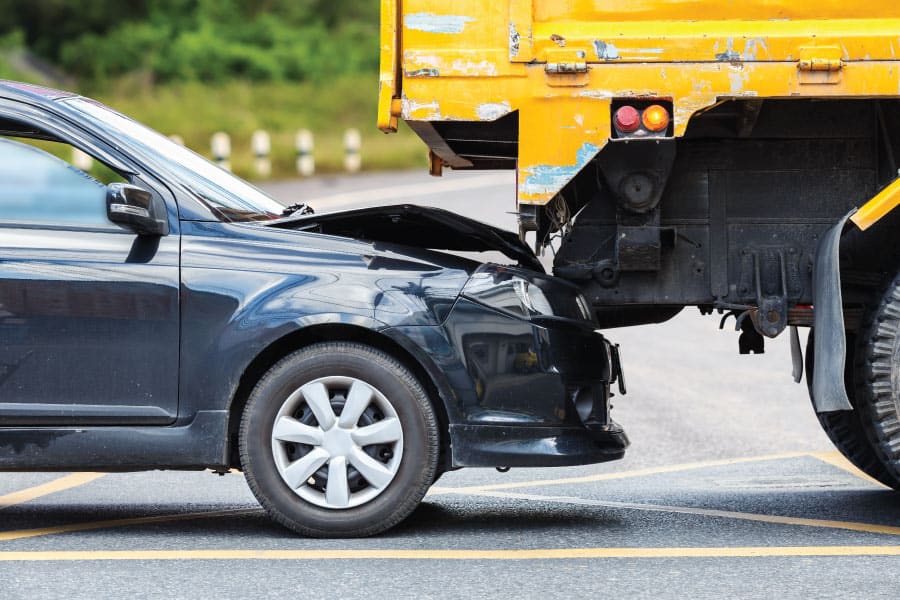
What every Sandy Springs and metro Atlanta driver should know about sharing the road with commercial trucks—and what to do if a crash has already happened.
The I-285 and GA-400 interchange is one of metro Atlanta’s busiest transportation corridors. For drivers in Sandy Springs and the surrounding North Atlanta communities, this stretch can be stressful even on a normal day. Add heavy commercial truck traffic, congestion, sudden slowdowns, and frequent lane changes, and the risk of a serious crash increases quickly.
Understanding truck accident risks near I-285 and GA-400 can help drivers recognize why this area requires extra caution—and what steps to take if a crash has already happened.
Why Is the I-285 and GA-400 Interchange So Dangerous for Truck Accidents?
I-285 and GA-400 connect major commuter routes, business districts, residential areas, and commercial transportation traffic. Drivers are often merging across multiple lanes, reacting to changing traffic patterns, and navigating heavy congestion within a short distance. This combination creates a challenging environment for any driver, but especially when large commercial trucks are involved.
The most common I-285 accident risks in Sandy Springs include:
- Heavy traffic volume throughout most of the day, not just rush hour
- Frequent forced mergers between I-285, GA-400, and nearby exits
- Unpredictable slowdowns from congestion, incidents, or construction
- Limited space between vehicles, leaving little room for error
- Large commercial trucks traveling directly alongside passenger vehicles
- Drivers making last-second lane changes or exits at speed
Tractor-trailers, box trucks, delivery trucks, and other commercial vehicles need significantly more time and space to slow down and maneuver. On a congested interchange, that physics problem becomes a real danger with very little room for error. A sudden brake, unsafe lane change, or distracted moment can lead to a rear-end collision, sideswipe accident, or multi-vehicle chain-reaction crash. Even a low-speed impact with a commercial truck can cause serious damage and injuries due to the massive weight difference between vehicles.
How Traffic Congestion Impacts Sandy Springs Accident Rates
Congestion is more than an inconvenience—it is a crash multiplier. Bumper-to-bumper conditions in congested areas like I-285 and GA-400 push drivers into habits that elevate risk: tailgating, aggressive lane changes, and last-second merges. When traffic abruptly stops, the margin for avoiding a collision collapses entirely.
For truck drivers, the problem is compounded. A fully loaded tractor-trailer can take the length of a football field to stop at highway speeds. When a passenger car cuts in front of a truck or traffic suddenly freezes ahead, the truck driver may have no time to react safely. Meanwhile, drivers in smaller vehicles often do not appreciate how much space a truck needs and may cut into that gap without realizing the risk.
Congestion also raises the chance of multi-vehicle pileups. A single rear-end impact can push a car sideways into adjacent lanes, triggering sideswipes and secondary collisions. In tightly packed traffic, one crash can become five in a matter of seconds—and sorting out who is responsible becomes far more complicated as a result.
What To Know About Multi-Car Accidents in Sandy Springs
Fault in a multi-car accident near I-285 or GA-400 is rarely clear-cut. A crash may involve a commercial truck, several passenger vehicles, conflicting witness accounts, and multiple insurance carriers—all pointing fingers in different directions. Determining what actually happened requires a careful look at the evidence.
Contributing factors in these crashes often include:
- Distracted or fatigued driving
- Unsafe lane changes or tailgating
- Speeding relative to traffic conditions
- Poor truck maintenance or mechanical failure
- Improperly loaded or unsecured cargo
When a commercial truck is involved, additional questions often arise about the truck driver’s hours-of-service logs, training history, maintenance records, and whether the trucking company bears any direct responsibility. Preserving the right evidence early can make or break a claim.
Key evidence to gather after a truck accident includes:
- Photos and videos from the crash scene (captured immediately if possible)
- Contact information and statements from witnesses
- The official police report
- Vehicle damage documentation
- Dash camera or traffic camera footage (requested promptly before it is overwritten)
- Medical records and treatment documentation related to your injuries
This information can help clarify what happened, how the crash unfolded, and who may be responsible.
Why Are Truck Accident Claims More Complicated Than Regular Car Accident Claims?
Many people assume a truck accident claim works like any other car accident claim. It does not—and that difference can matter significantly.
Truck accident claims often involve more than one responsible party. Depending on what happened, responsibility may extend beyond the driver to the trucking company, a fleet maintenance provider, a cargo loading contractor, or even a vehicle manufacturer if a defective part contributed to the crash. Each party may have its own insurer and legal team.
Commercial insurers also tend to move quickly after a crash. Their investigators and adjusters may begin gathering records, reviewing damage, and looking for ways to limit liability before injured drivers fully understand the extent of their injuries.
That is why it is important to take the accident seriously from the beginning.
What Should You Do After a Truck Accident Near I-285 or GA-400?
The moments after a serious crash can be confusing and overwhelming. You may be in pain, in shock, or unsure what to do next. These steps can help protect your health and your claim:
- Call 911. Get law enforcement and emergency services to the scene. A police report can become an important piece of evidence.
- Get medical attention. Some injuries, including concussions, internal bleeding, and soft tissue injuries, are not immediately obvious. Delaying care can also make it harder to connect your injuries to the crash.
- Document what you can. If you are physically able, photograph the vehicles, road conditions, visible injuries, license plates, and the truck’s company name or DOT number.
- Gather witness information. Names, phone numbers, and brief statements from people who saw the crash can help clarify what happened later.
- Be careful with insurance conversations. Adjusters may contact you quickly. Avoid giving detailed statements or accepting blame before speaking with an attorney.
- Contact a truck accident attorney. The sooner an attorney is involved, the sooner key evidence can be preserved and the right parties can be identified.
Injured in a Truck Accident Near I-285 or GA-400? The Balams Firm Can Help.
Truck accident risks near I-285 and GA-400 are a serious concern for drivers throughout Sandy Springs and North Atlanta. When commercial trucks, congestion, and multi-car traffic patterns are involved, the aftermath can be confusing, painful, and difficult to manage alone.
You should not have to figure out the next steps by yourself. At The Balams Firm, we help injured drivers and passengers understand their options, preserve important evidence, and identify who may be responsible. While you focus on your recovery, we focus on protecting your claim.
If you or someone you love was hurt in a truck accident near I-285, GA-400, or anywhere in Sandy Springs, we are here to help. The first step is simply a conversation.
Contact us today. Your consultation is free.